Buddhism and Panic Attacks: A Buddhist Perspective on Fear and Healing

Updated: 3 days ago
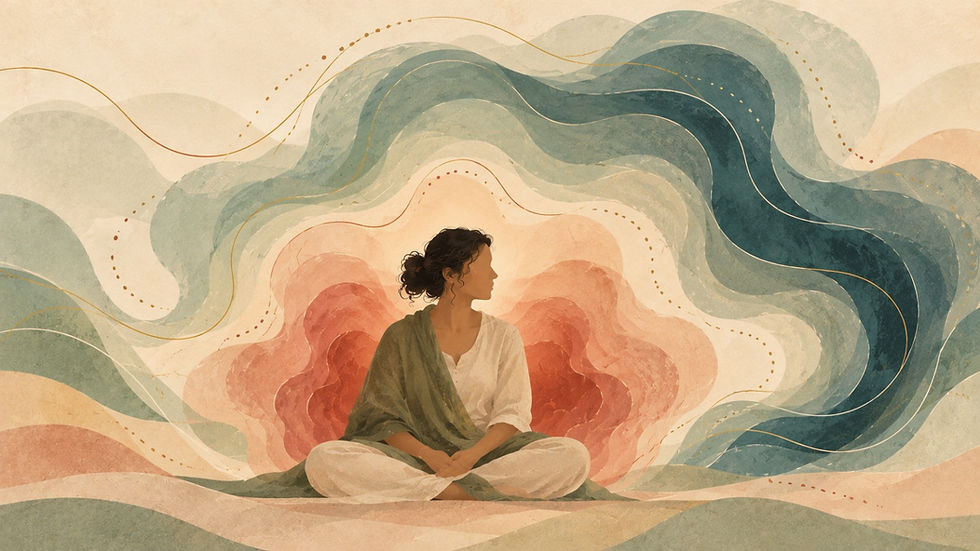
A panic attack can make the body feel unsafe, and the mind sounds an alarm. Buddhist teachings offer a way to understand fear with awareness and compassion. They do not replace medical care or evidence-based treatment.
When fear becomes an alarm
Imagine sitting quietly at home when your heart suddenly begins to race. You feel dizzy. Your breathing feels difficult. A thought appears: Something is seriously wrong.
You may call someone, step outside, or rush to a doctor. Later, even when you feel well, you may begin watching your body closely. You might avoid a crowded bus, a long queue, or being alone. The fear of another attack can start shaping your life.
A panic attack can involve intense fear and physical sensations such as a racing heart, shaking, dizziness, or breathlessness. These symptoms can feel frightening. If they are new, severe, or unusual, seek medical advice rather than assuming they are caused by panic.
Can Buddhism cure panic attacks? Buddhism is not a clinical treatment, and meditation is not a guaranteed cure. Buddhist teachings can, however, offer a thoughtful way to meet fear. For some people, Buddhist practice can be a source of support alongside professional care.
The first arrow and the second arrow
In the Sallatha Sutta, the Buddha describes a person struck by an arrow. The wound hurts. Then imagine that a second arrow strikes the same person. Now there is the pain of the first wound and the added pain of the second one.
The teaching uses this image to explore how painful feelings may be followed by mental distress. The first arrow is the pain itself. The second is the mind’s response: resisting, grieving, or becoming overwhelmed by the experience. The second arrow does not mean that the first pain is imaginary. It means that another layer of suffering may arise around it.
In a panic episode, we can use the image as an analogy. The first arrow might be a pounding heart or a dizzy spell. The second may be the frightening conclusion: I am going to die. I will lose control. This will never stop. That thought can add fear to an already frightening sensation. The increased fear may make the sensations feel even stronger.
This is not a reason to blame yourself. You do not choose to panic. The question is whether noticing the two layers can help you understand what is happening.
Try asking: What sensation am I experiencing? What is my mind predicting about that sensation? A prediction is not the same as a medical diagnosis. If you are unsure what is causing the symptoms, seek professional advice.

Kisā Gotamī: a story of being met with compassion
A well-known Buddhist story tells of Kisā Gotamī, whose young child has died. Grief-stricken, she carries the child from house to house, asking for medicine. The Buddha asks her to bring mustard seeds from a home where no one has died. People are willing to give her seeds, but each household has also known death. As she listens, she begins to see that loss is not hers alone.
This story appears in later Buddhist commentary; it is not a clinical case history. Panic and bereavement are different experiences. Still, the story offers a useful lesson: the Buddha does not shame Kisā Gotamī for being overwhelmed. He meets her distress and guides her toward understanding through contact with other people.
For someone experiencing panic, support may come from a trusted relative, a friend, a doctor, a counsellor, or a thoughtful spiritual teacher. It does not mean that every family member or community will respond helpfully. Choose someone who listens without dismissing or shaming you.
Who helps you feel understood when you are frightened? Is there someone you can contact when panic returns?
Hakuin and the meaning of “Is that so?”
A familiar Zen teaching story describes Hakuin, a respected monk who lives in a village. A young woman becomes pregnant. Her angry parents demand that she name the father. Under pressure, she names Hakuin.
The parents go to the monk and accuse him. Hakuin replies, “Is that so?” His reputation in the village is damaged. When the baby is born, the parents bring the child to him and tell him to take responsibility. Hakuin accepts the baby. He finds milk, cares for the child, and raises the baby.
After some time, the young woman admits that she lied to protect the real father. Her parents return to Hakuin, explain the truth, and ask for the child back. Hakuin gives the baby to them and again says, “Is that so?”
This is a teaching story, not a verified account of Hakuin’s life. His response does not mean that injustice should be accepted or that a person should remain silent when harmed. The story points to his ability to respond to what needed attention in each moment: first, a child needed care; later, the family came to take the child home.
Panic often arrives with a strong verdict: I cannot cope. I am in danger. This will happen forever. A Buddhist response is not to force a positive thought. It may be to pause and recognize: Fear is here. My mind is making a prediction. I can take my symptoms seriously and seek help without treating every frightening thought as fact.
Buddhist practices in everyday life
Mindfulness in Buddhism is not only sitting still and watching the breath. The Satipaṭṭhāna Sutta describes mindfulness of the body, feelings, and mind. Practice can also enter familiar routines, devotional life, and relationships.
Walking slowly: Choose a safe, short path, such as a courtyard or quiet corridor. Notice your feet touching the ground and the movement of your body. When your attention wanders, return to the next step. This is not about walking until you feel calm; it is a way to practise steady attention.
Reciting a verse or mantra: If a prayer or Buddhist phrase is already meaningful to you, repeat it at a comfortable pace. Someone familiar with Buddhaṃ saraṇaṃ gacchāmi may use those words as a steady focus. Do not force a phrase that feels unfamiliar or uncomfortable.
Bowing: If bowing is part of your practice, attend to the movement: bringing your hands together, bending, and rising. It can be a deliberate gesture of reverence and humility. It is not a bargain with the Buddha to make panic disappear.
Chanting with others: A temple or meditation group may offer shared rhythm and a feeling of belonging. You can listen quietly if chanting feels difficult. Choose a teacher or group that respects professional mental health care.
Doing an ordinary task carefully: While making tea, washing a cup, folding clothes, or watering a plant, notice the warmth, weight, sound, and movement involved. When your mind wanders, return to the task. Practice can be part of daily life; it need not become another demand to perform perfectly.
These are options, not obligations. If meditation or inward attention increases your distress, pause the practice and speak with someone qualified to help.
Can meditation treat panic disorder?
Mindfulness and meditation may support some people, but research does not show that Buddhist practice alone cures panic disorder. A 2025 randomized trial in India found changes in heart-rate variability after an eight-week Rajyoga meditation program among people with panic disorder. That finding relates to one specific program. It does not prove that every kind of meditation will help everyone.
Cognitive behavioral therapy (CBT) is a well-established treatment for panic disorder. A trained professional can help a person understand how bodily sensations, frightening interpretations, and avoidance can reinforce fear. A doctor or mental health professional can assess symptoms and discuss appropriate care, which may include therapy, medication, or both.
At Monastery of Minds, one-to-one talking therapy offers space to understand what you are experiencing and consider practical ways forward. Sessions may draw on CBT, REBT, person-centered therapy, Gestalt, emotion-focused therapy, or DBT-informed skills, depending on the person’s needs. The service does not prescribe medication. Assessments, when used, help guide sessions. In-person sessions are available in Chandannagar, with online sessions for people elsewhere.
Buddhist practice does not promise that fear will never arise. It offers ways to meet fear without adding shame or harsh judgment. Sometimes practice is a familiar chant or a mindful walk. Sometimes it is asking someone to stay with you and arranging professional help. Both can be acts of wisdom.

Frequently asked questions
Can Buddhism cure panic attacks?
Buddhism is not a clinical treatment, and Buddhist practice cannot guarantee a cure. Meditation or other familiar practices may support some people alongside professional care.
What does the Buddhist second-arrow teaching mean for panic?
The first arrow represents the painful experience. The second represents the extra distress that may arise through resistance, fear, or catastrophic thoughts. The teaching is not a way to blame someone for panic or deny the physical sensations.
Should I meditate during a panic attack?
Not necessarily. If meditation or focusing inward makes you more distressed, stop. You might instead connect with someone you trust or seek professional help. There is no single practice that suits everyone.
What treatment can help with panic disorder?
A health professional can assess your symptoms and discuss treatment options. CBT is a well-established psychological treatment for panic disorder. Treatment may also include medication, depending on the person’s circumstances.


Comments