Panic Attacks: The Science, the Social Side, and What Can Help


Imagine you are on a crowded bus when your heart suddenly starts racing. Your chest feels tight. You feel dizzy and think, “What if I faint here?” You may want to get off immediately, but the bus is still moving, and people are watching.
The physical sensations are real. So is the fear. A panic attack can make an ordinary moment feel like an emergency- and the worry about having another one can start affecting where you go and what you do.
What happens during a panic attack?
A panic attack is a sudden episode of intense fear or discomfort. It can include a pounding heart, sweating, trembling, shortness of breath, dizziness, nausea, tingling, or a feeling of being detached from your surroundings. Some people fear they are losing control or having a medical emergency.
One way to understand the science is to think of the body’s threat response as an alarm system. When the brain detects danger or believes danger may be present, it can prepare the body to act. Your heart may beat faster, your breathing may change, and your attention may narrow toward possible threats.
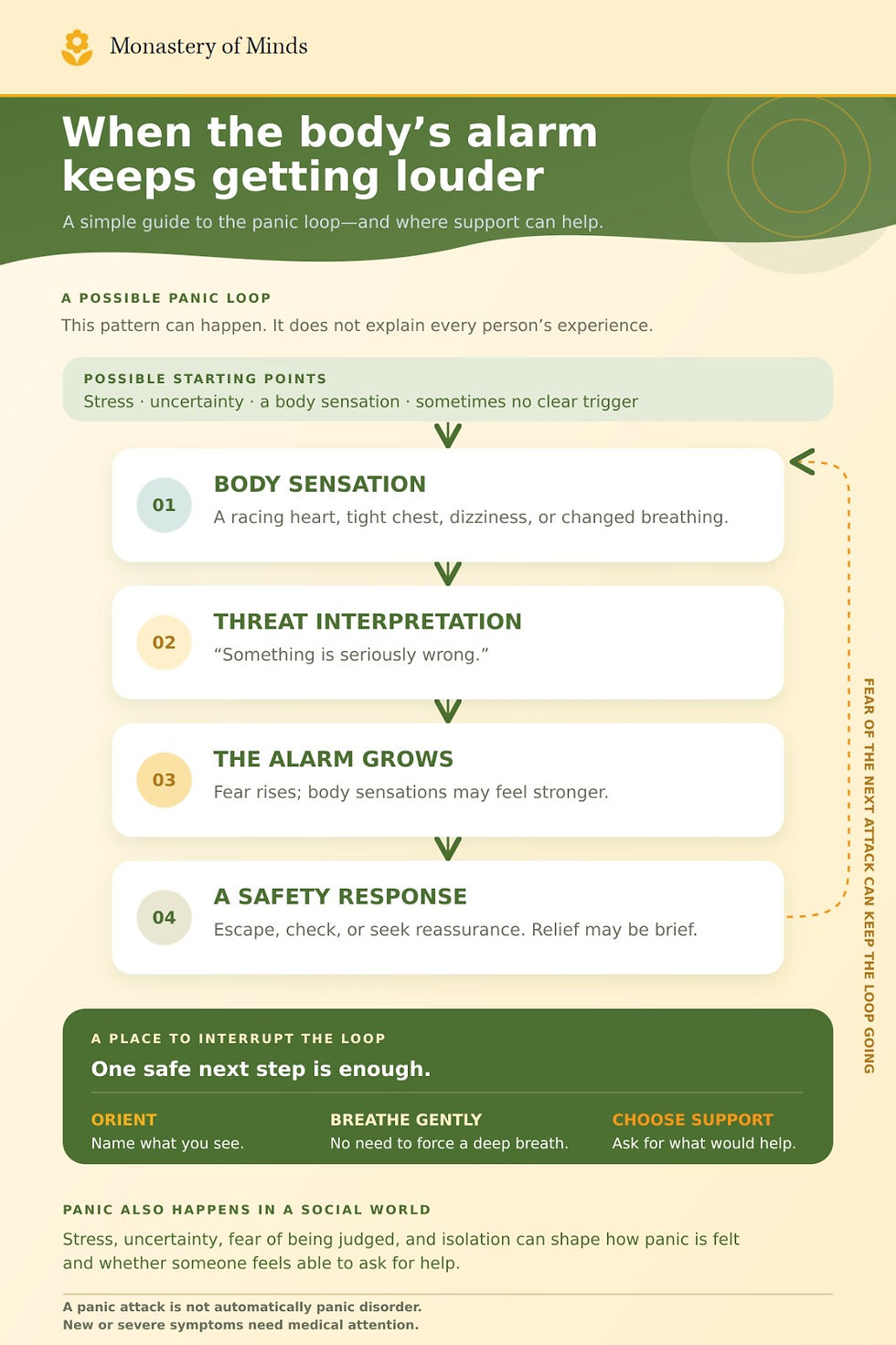
During panic, a person may notice one of these sensations and interpret it as a sign of immediate danger: “My heart is racing; something must be wrong.” That interpretation can increase fear, which may intensify the sensations. This is one pattern researchers use to explain panic. It is not the only cause, and it does not mean the person is imagining anything.
Why are panic attacks so common?
The short answer is that the body’s alarm system is part of being human, while people differ in what sets it off and how they interpret its signals. Stress, health worries, major life changes, or a frightening physical sensation may contribute for some people. Panic does not have one cause, and it is not a personal failure.
It also helps to separate panic attacks from panic disorder. A panic attack is an episode; it does not automatically mean someone has a mental health disorder. In a large US survey using older diagnostic criteria, about 23% of adults reported isolated panic attacks at some point in their lives, while about 4.7% met the survey’s criteria for panic disorder. A separate analysis of World Mental Health Surveys across countries estimated lifetime panic disorder at 1.7%. These figures come from different studies and definitions, so they should not be treated as a single global rate. They do show why it matters to distinguish an occasional attack from a disorder.
The social side of panic
Panic does not happen in a social vacuum. Imagine the person on the bus again. They may not only fear fainting; they may fear being stared at, judged, or seen as “dramatic.” At work, someone may hide what is happening because they worry colleagues will question their ability to do the job. At home, they may hear, “Just calm down,” when what they need is patient support.
These reactions can leave a person feeling alone. They may avoid asking for help because they believe they should manage everything by themselves, or because they are unsure whether treatment will help. A representative German study of people with anxiety disorders found that self-reliance and doubts about treatment were commonly reported barriers to seeking help. That study cannot tell us exactly how people in India experience those barriers, but it illustrates how beliefs and social expectations can shape help-seeking.
A supportive response does not need to be complicated. Try asking, “Would you like me to stay with you, help you find a quiet place, or contact someone?” Listening without ridicule or pressure can make it easier for a person to explain what they need.
What does research say about treatment?
Cognitive behavioral therapy (CBT) is a well-studied treatment for panic disorder. It can help people notice how they interpret body sensations and respond to fear. Some CBT programs include interoceptive exposure: carefully planned, therapist-guided practice with sensations a person fears. The aim is to learn about those sensations in a supported setting. It is not an exercise to try on your own by deliberately triggering symptoms.
A systematic review and component analysis examined 72 studies involving 4,064 participants. It found that interoceptive exposure was associated with better outcomes in the CBT programs studied. This is useful evidence, but research findings cannot predict exactly what will work for one person. Treatment needs to be discussed with a qualified professional and tailored to individual needs.
An interactive check-in: What is your pattern?
Take a moment to reflect. You can answer in your head or write a few words.
What did you notice first: a body sensation, a thought, a situation, or a sudden wave of fear?
What did you think the sensation meant?
What did you do next: leave, seek reassurance, call someone, or try to carry on?
There is no correct answer. The point is to notice how your body, thoughts, and actions may connect. If reflecting feels uncomfortable, pause and return to it later.
What might help during a frightening moment?
If you are somewhere safe and think you may be experiencing panic, try focusing on the next small step. You do not have to force yourself to feel calm.
Orient to the room. Name a few things you can see. Notice your feet on the floor or your back against a chair.
Let your breathing be gentle. Avoid forcing very deep breaths. If it feels comfortable, allow the breath out to be a little slower than the breath in.
Use a grounded reminder. Try: “This is frightening. I can take one moment at a time.”
Ask what you need next. Would it help to sit down, call someone, move to a quieter place, or seek medical care?
These are coping ideas, not a way to diagnose yourself. New, severe, or unusual symptoms—especially chest pain or difficulty breathing- need medical attention. Some health conditions can cause sensations that feel like panic, so do not assume the cause.
Panic attack counselling at Monastery of Minds
If panic attacks are recurring, making you avoid activities, or leaving you constantly worried about the next one, you do not have to work through the pattern alone. Counselling can offer space to talk about what happens and consider practical next steps at a manageable pace. It does not replace medical assessment or include prescribing medication.
Monastery of Minds offers in-person counselling in Chandannagar and online counselling across India. You can reach out to discuss whether counselling may be helpful for you.

Common questions about panic attacks
Does one panic attack mean I have panic disorder?
No. A panic attack is an episode; panic disorder involves repeated, unexpected attacks with ongoing worry or changes in behavior. A qualified professional can assess your experience.
Can a panic attack happen without a clear trigger?
Yes. Sometimes the trigger is not obvious. At other times, a person may notice links with a situation, a thought, stress, or a physical sensation.



Comments